


There is something almost theatrical about the way Omah Lay exists in the public imagination. His personality reads as genuinely, defiantly dysfunctional, and the fascinating thing is that this dysfunction isn’t a flaw in the product; it is the product. Every album he releases feels less like a deliberate artistic statement and more like a psychological report submitted under duress. It is not a critique. If anything, it explains why Nigerians have developed an almost perverse affection for whatever turbulent mental state he finds himself in — because invariably, chaos yields gold.

None of this diminishes how formidable an artist Omah Lay actually is. His discography stands as one of the more cohesive bodies of work to emerge from the Nigerian music industry in recent memory. Songs like ‘Soso’ and ‘You’ embedded themselves into the emotional architecture of a generation. The conversation about legacy and what constitutes greatness in Nigerian music is a subjective one, and Omah Lay has earned his seat at that table entirely on his own terms.
His sophomore album, Clarity of Mind, arrives with an almost provocative sense of self-assurance. After his 2022 debut Boy Alone, and its subsequent deluxe edition, the artist proved he could render emotional chaos into listenable form. Now, with the follow-up, the question isn’t whether Omah Lay can make good music. It’s whether clarity, as a concept, is even something he’s genuinely chasing, something he has found, or simply the most interesting lie to tell.
The growth between the two albums is audible, though it manifests less in technical evolution and more in a certain tonal self-awareness. Boy Alone was a project soaked in emotional wreckage; an unfiltered feed from a mind that didn’t seem entirely interested in performing wellness. It was heavy, brilliant, and uncomfortably honest. What Clarity of Mind offers is something subtler: not a resolution, but more of a reframing. The sonic ambience has shifted and there is a quirkiness to this new project that suggests an artist who has found, if not peace, then at least a more interesting relationship with his unrest.
Which makes the opening track’s title all the more telling.
‘Artificial Happiness’ opens the album as both confession and anthem, a slow-burning ode to igbo, the substance Omah Lay treats here not as a vice but as a creative instrument, a key that unlocks the specific frequency his music lives in. Over a tempo that begins languid before escalating into a midtempo collision of percussion and reflective rhythm, he situates himself: where he’s come from, what he refuses to lose, and what fuels the version of himself that makes music. That an album called Clarity of Mind opens with ‘Artificial Happiness’ is not incidental. It is a thesis statement about the kind of clarity being offered here.
‘Jah Jah Knows’ follows in the same atmospheric lane — midtempo, percussion-forward, with Omah Lay’s distinctively bellowing vocals anchoring a track that is harder to parse than it first appears. A brief phase of horns sharpens the emotional intent before the song retreats back into its layered groove. This is one of the more opaque entries on the project, and that is deliberate. Omah Lay has never been a lyricist who makes it easy. His writing rewards excavation, and those willing to sit with his words long enough will find far more texture than the surface suggests.

‘Canada Breeze’ leans into chant-like melodies in the way that only someone from Port Harcourt seems to pull off naturally; that particular relationship between sorrow and rhythm, between experience and cadence. He narrates a year of contradiction, weaving heartbreak and cannabis into the same sentence with the casual fluency of someone who has long stopped distinguishing between the two. When he raps “When I been lost my bae and award all in one day / I call Selassie / 10g for Grammies day / One backy don swallow all my cana / Now I dey see things upside down,” it doesn’t necessarily read as an excuse.
The pivot to women arrives predictably but no less effectively in ‘Water Spirit’. If ‘Soso’ was about summoning a woman to absorb pain, ‘Water Spirit’ is its spiritual cousin; a call for cleansing, for absolution dressed in desire. He opens with a woman arriving to “make it rain,” and moves seamlessly into boasting about the exclusivity of his attention. “I don’t give D to everybody” lands with the confidence of someone who knows exactly how this sentence will be received. The allure of Omah Lay in this register is direct, unabashed, almost defiant in his sensuality and this is perhaps the quality that most consistently draws people into his music.
Then comes the descent.
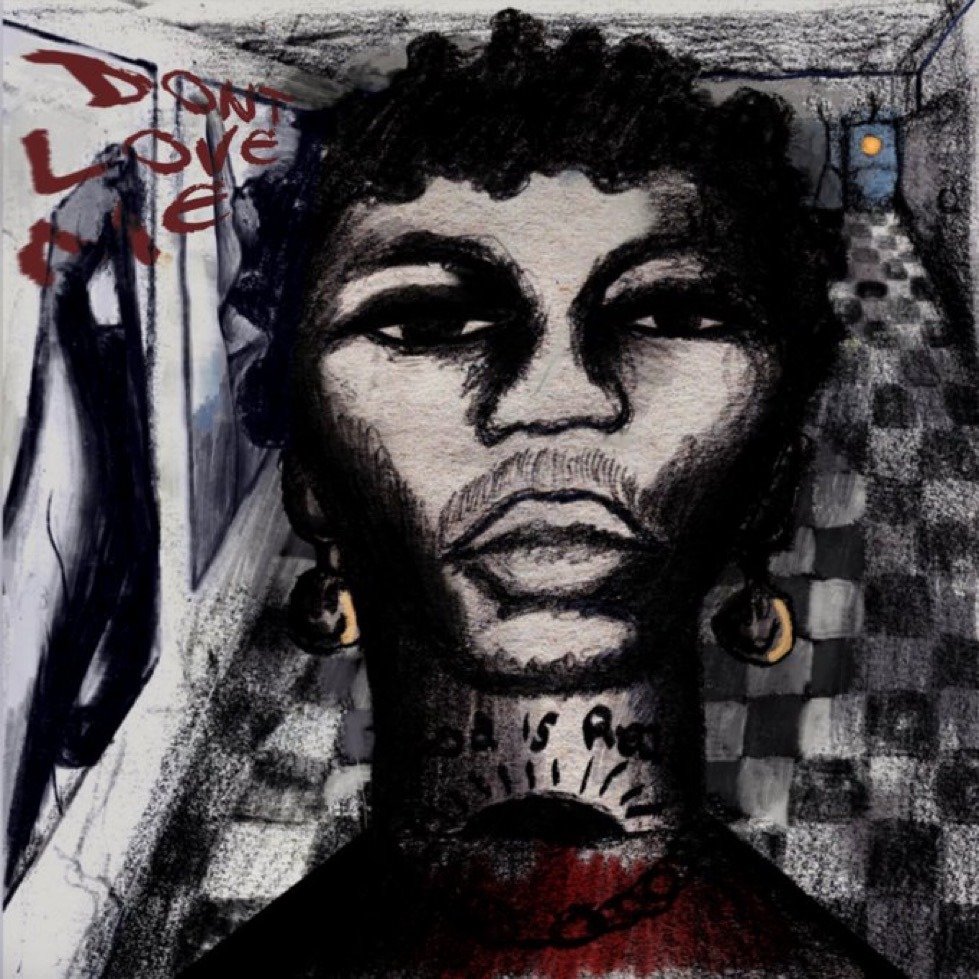
‘Don’t Love Me’ is one of the record’s most quietly devastating moments — sober in mood, slow in tempo, a retreat from both the highs of substances and the warmth of women. Here, neither works. The emotional disconnection that defined Boy Alone resurfaces, stripped of decoration, and Omah Lay does the only thing left: pleads to not be loved, because love, apparently, costs more than he currently has to spend.
‘Coping Mechanism’, featuring Elmah, is the album at its most exposed. Even Elmah’s presence cannot dilute how raw this track feels. Over a slow, contemplative arrangement of light konga taps and strings, Omah Lay makes the admission the album has been circling: “unhappiness is hurting me.” He speaks of the performance of okayness on tour, the exhaustion of having to embody someone who has it together when the interior evidence suggests the opposite. It is a brutally intimate track.
‘Julia’ offers relief; not catharsis, exactly, but a kind of soft landing. Omah Lay finds a comfortable mumble over box beats, and the track serves an important structural function: it demonstrates just how measured the album’s pacing is. From track one to track six and beyond, the tempo never swings far enough to disorient the listener. There is an intentionality to the sequencing that is easy to overlook but becomes impossible to miss once you register it.
The glide from ‘Julia’ into ‘Waist’ is one of the album’s more enjoyable transitions. Where the previous track was measured and introspective, ‘Waist’ finds Omah Lay in a state of pleasurable confusion, struck by the physics of a woman’s body. When he says “na two people’s something she carry for waist,” there is a genuine comedic warmth to it, a rare moment of levity in an album that mostly traffics in weight.

‘Mary Go Round’ opens sombrely before pulling the curtain back on a discovery Omah Lay treats with his signature dry seriousness. The beat carries a sensual energy, and the lyricism is precisely the kind only he would deliver: not quite advice, not quite confession, but something suspended between the two.
‘I Am’ is the album’s peak; the track where everything the record has been building towards crystallises. Over thudding, creeping production that seems designed to feel like the inside of a restless mind, Omah Lay is entirely in his own world: apprasing himself, communing with his substances, and admitting that the thoughts in his head have become too many to contain. It is his most complete performance on the album.
‘Holy Ghost’, released as far back as 2023, making it the album’s earliest antecedent, is perhaps the only track on the project where Omah Lay steps out of numbness entirely. Powered by log drums and threading violin riffs over an insistent drum foundation, it functions as a palate cleanser before ‘Amen’ closes the record. And it is in this closing sequence that the album’s greatest trick becomes clear.
From ‘Artificial Happiness’ to ‘Coping Mechanism’ to ‘Amen’, the titles of the tracks form their own quiet narrative, a map of a mind moving from chemical comfort through raw admission toward something approaching grace. Whether or not that arc is intentional, it is impossible to experience accidentally. Omah Lay, it turns out, is a careful architect of his own mythology.
So: does Clarity of Mind actually deliver clarity? Not exactly. What it offers is something more specific and more interesting: the clarity of someone who has stopped pretending the darkness will lift, and has instead committed to making extraordinary things inside of it. The album doesn’t prove Omah Lay is healed. It proves he has learned to package the wound.
His sophomore record confirms what his debut introduced: that Omah Lay produces his finest work not despite his demons but in full negotiation with them. In that sense, Clarity of Mind is a revelation of a specific kind — the kind where you realise that the most beautifully made things often come from the least beautiful places.
As for whether it surpasses Boy Alone: the comparison feels less interesting than simply acknowledging that the man who made both is operating at a level the Nigerian music industry genuinely needs. As far as 2026 album releases are concerned, this one sets an early and formidable bar.











Leave a Reply