


On No Signs of Weakness, Burna Boy embraces unpredictability and attempts to reconnect with the version of himself only day-one fans remember.
It’s been over a week since the release of Burna Boy’s latest studio album, No Sign of Weakness, and here’s what we think about it — it takes a different dimension from the sound we’re used to from the artist. Yes, it’s him, it feels like him, but there’s a change — an embrace of his roots that his previous albums over the past few years haven’t exactly reflected.
No Sign of Weakness presents a project that has the potential to reconnect Burna Boy with his roots, and it’s the unconventional nature of his sound that makes it endearing; if you choose not to focus on how underwhelming it is compared to his earlier albums.
It’s how the album opens with a loud bang. Unlike typical Nigerian albums that begin sombre and reflective, Burna Boy unwraps this album with “No Panic,” where he asserts dominance in a fiery manner, assuming his icon stand when he says, “use Timberland march all of them” — an allusion to the violent bravado that Burna Boy is quite known for on Tinubu’s dear internet.
While No Sign of Weakness signals Burna Boy taking a rather different path from what we are used to, it feels as though he’s seeking to embrace the unknown — to show that he’s not afraid of whatever route his career takes or whatever reception that might come with this change. And with this album, he embraces that uncertainty.
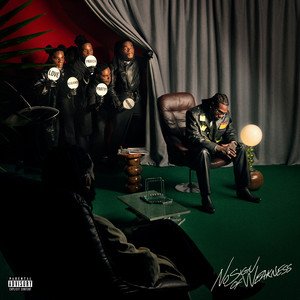
So how well did Burna Boy fare in his attempt to embrace the unknown, to be different?
Burna Boy creates a balance in this album between being cool and chaos — and being infectiously assertive — well enough to remind us who exactly he is: the African Giant. What he portrays in “Buy You Life” is a reflection of composure, a demonstration of relatability that transitions into the next track, “Love,” a charming combination of sweet melodies that somehow feels like the long-lost version of Burna Boy we once knew, or at least caught a glimpse of.
The more you keep listening to this album, the harder it hits, and the more intense your ability to connect the dots becomes. You’re no longer taken aback by the brashness of the opening track. Instead, you feel welcomed — and rather than being rushed through the album, you’re swayed along, through Burna’s musky melodies laced into every song.
With a high from “No Panic,” Burna Boy leads you into the grittiness of “No Sign of Weakness.” Almost immediately, you’re able to decipher that with this album, it’s difficult to know what to expect. And much like Burna himself — whose talent constantly defies expectations — No Sign of Weakness continues to unravel the mystery of what he has up his sleeves.
The overall impression of No Sign of Weakness is an affinity with the artist’s humble roots — a stripped-down version of a westernized sound and a balance of grittiness and heightened emotion, often amplified by a select few of the featured guests. It turns out Burna Boy is, indeed, who he claims to be.
From “Love,” a sombre reflection on support, mixed with the sweet delicacy of strings and thudding percussion, and then defined by crowd vocals with a child-like effect, Burna storms into the battiness of “TaTaTa” featuring Travis Scott — a track which, in all sincerity, has a better appeal now as part of the album than when it was released as a single, which initially required a dedicated level of patience for it to hit.
It becomes a wave — a tussle between calm and chaos, albeit an enjoyable one. There’s the calm of “Come Gimme,” and then “Dem Dey” follows, featuring Burna Boy in the glory of his pettiness when he says, “I no buy Lambo, is that why you’re shouting?”
If you’re a true lover of Burna Boy and have been riding the wave with him long before his breakout with “Ye,” you’ll notice the nostalgic familiarity of “Sweet Love” — a sensual reggaeton melody, featuring the delectable raspiness of Burna’s vocals and alluring background coos.
The sauce of No Sign of Weakness lies in how Burna Boy is able to stir his sound — cultivating a specific unfamiliar familiarity that now defines his identity. Where some may see failure in what he attempts to portray with this project, there’s actually an unfolding of what he’s capable of.
For a long time, Burna Boy has embraced the comfort of westernizing his sound. Now comes a project that largely decorates the walls of his roots — with tracks like “28 Grams,” a reflection of his love for weed, and the pure house sound of “Kabiyesi.”
Yet even still, he heightens the westernization of his sound with “Empty Chairs” featuring Mick Jagger — a track that opens with a Chicago countryside influence and eventually shifts into the familiar Burna Boy energy that newbies in the Odogwu sound are used to.
And even with the sampling of Soul II Soul’s “Back to Life” on “Update,” Burna Boy still makes a deliberate return to his roots, drawing influence from the core of Afrobeat (not afrobeats).
The African Giant closes off the album with melted pieces of the sound he embodies, on “Change Your Mind” featuring Shaboozey and “Born Winner.” The former is a classic country-pop song, while “Born Winner” holds the introspective energy that one might have expected from the album’s intro. It sits as a track that could ideally serve as either an opener or a closer, given the unconventional nature of No Sign of Weakness’s beginning.
Burna Boy’s new album is what you’d typically use to distinguish true lovers of his music — those who stick with him no matter what, from those who simply follow trends based on how his sound is shaped. The real ones recognize that this album is not a brand-new direction, but rather a different kind of journey — a walk down memory lane, revisiting what the artist once represented, although now more amplified, positioned, and refined.
No Sign of Weakness isn’t Burna Boy’s strongest effort, and while it may underrepresent the weight of his iconic status, it’s not a throwaway project. Given time and a patient ear, the album begins to settle in — you ease into it and then it grows on you.









Leave a Reply